Your Ultrasound Found an
Umbilical Cord Cyst
What this finding means, why it matters more later in pregnancy, and the plan your care team will follow to keep a close eye on you and your baby.
What Is an Umbilical Cord Cyst?
Why Timing Matters
Early Pregnancy
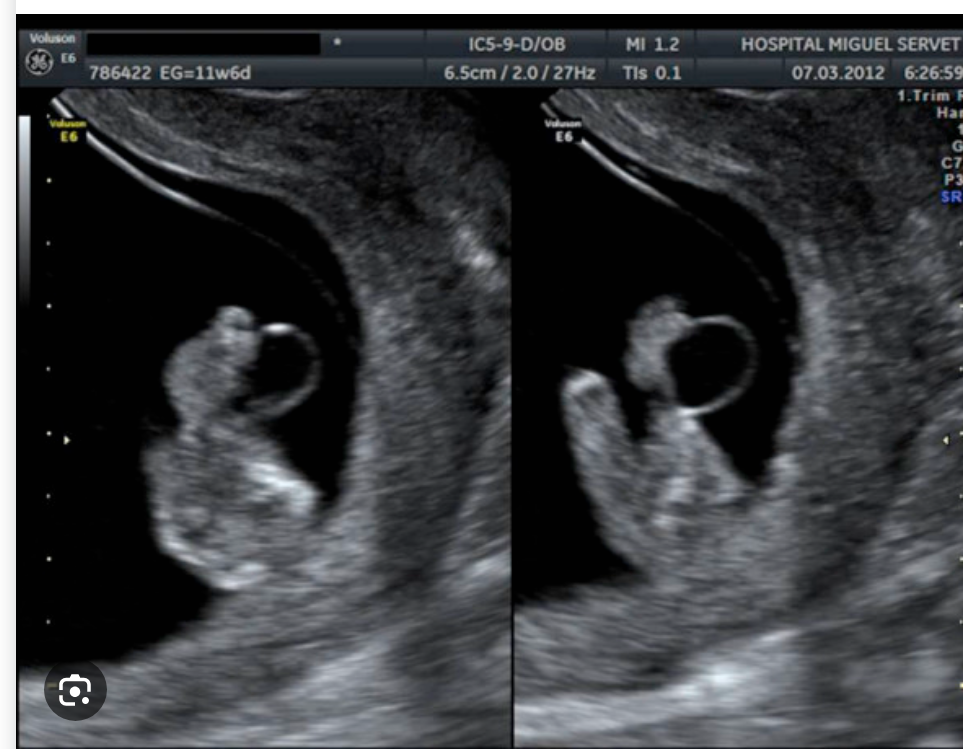
Cord cysts found in the first trimester are common and frequently go away on their own as the pregnancy progresses. In isolated cases, simply watching is often reasonable.
Later in Pregnancy
A cyst that is newly found or still present in the second or third trimester is treated differently. It's not automatically dangerous — but it does call for a closer look.
What This Finding Can Be Associated With
Genetic Conditions
Cord cysts have a recognized association with certain chromosomal conditions, so your team will offer genetic counseling and testing.
Heart Development
A detailed heart ultrasound (fetal echocardiogram) is a standard part of the workup to look closely at how your baby's heart has formed.
Abdominal Wall & Bladder
The detailed anatomy scan also checks the area where the cord attaches to your baby's abdomen and the urinary tract.
Could It Press on the Cord's Blood Vessels?
The umbilical cord is a narrow space. If a cyst becomes large, it can — in some cases — press on the blood vessels running through the cord.
Your Evaluation Plan
-
1Detailed (Targeted) Ultrasound — A thorough anatomy scan to look closely at your baby's organs, heart, abdominal wall, and the cord itself.
-
2Fetal Echocardiogram — A specialized ultrasound focused entirely on your baby's heart structure and function.
-
3Genetic Counseling — A conversation with a genetic counselor about what testing options are available and what each can and cannot tell you.
-
4A Personalized Monitoring Schedule — Based on everything found, your MFM team will lay out a plan for the rest of your pregnancy.
Genetic Testing: What to Expect
Amniocentesis
A test that samples a small amount of the fluid around your baby to directly check the chromosomes. Given the association with certain conditions, it will likely be offered — but it is not required.
It's Your Decision
Whether to pursue testing is a personal choice. Your genetic counselor will walk through the risks, benefits, and what different results would mean for your care.
Extra Monitoring for the Rest of Pregnancy
-
1Biophysical Profile (BPP) — An ultrasound-based check of your baby's movement, breathing motions, muscle tone, and fluid level.
-
2Non-Stress Test (NST) — A short session monitoring your baby's heart rate pattern, usually with belts placed on your belly.
-
3Umbilical Artery Doppler — A specialized ultrasound that measures blood flow through the cord — the key test for catching any vessel compression early.
Understanding Your Doppler Results
Normal Flow
Blood is flowing through the cord normally.
What happens: Continue your regular monitoring schedule and plan for delivery around your due date.
Early Changes
A mild change in flow resistance is seen — an early signal to pay closer attention.
What happens: More frequent monitoring; your team may discuss adjusting your delivery timing.
Significant Change
Blood flow through the cord is notably reduced.
What happens: Your team will discuss prompt delivery, often by cesarean, to keep your baby safe.
Planning for Delivery
Timing
Most pregnancies with a reassuring evaluation are able to reach term. Earlier delivery is only considered if monitoring shows a specific concern.
Mode of Delivery
A vaginal delivery is often still possible. Cesarean delivery is reserved for situations where Doppler findings or fetal heart rate patterns raise concern.
During Labor
Continuous fetal heart rate monitoring is used during labor so your team can respond quickly to any change.
Questions to Ask Your MFM Specialist
- Was the cord cyst the only finding on my ultrasound?
- How large is the cyst, and will it be measured again at future visits?
- What genetic testing options do you recommend for my situation, and are they optional?
- How often will I have Doppler ultrasounds, BPPs, or NSTs from here on?
- What symptoms or changes should I report right away?
- Does this finding change when or how you'd recommend I deliver?
- Will my baby need any follow-up testing or evaluation after birth?
The Bottom Line
not an emergency
ongoing monitoring
have good outcomes
This material supports — and does not replace — a conversation with your physician.